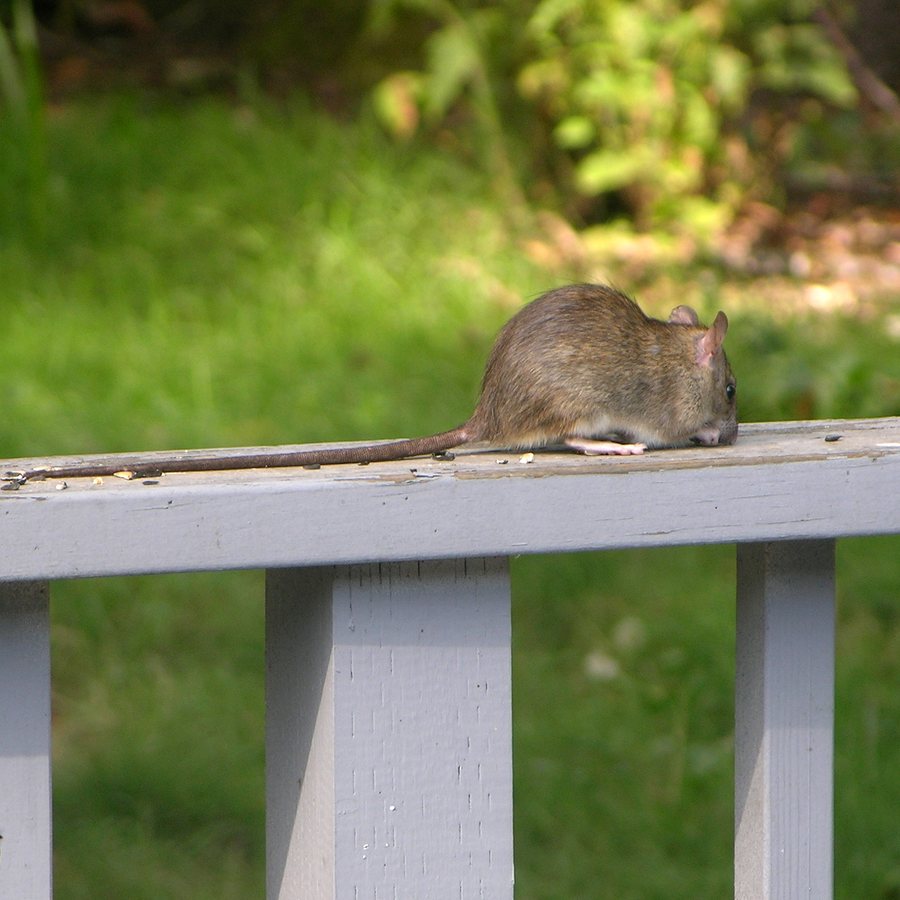
Rodent control in Lancaster, TX is mostly a roof rat problem. These agile climbers travel fence tops, tree limbs, and utility lines out of the Ten Mile Creek and Bear Creek corridors and the mature tree lines of the older neighborhoods, then slip into attics, soffits, and garages. House mice come in low, through gaps around the slab, garage doors, and utility penetrations. Along the I-35E and I-45 warehouse and distribution corridor, Norway rats work the loading docks and dumpster pads and spill into the surrounding blocks. Rodents gnaw wiring, foul insulation, and breed fast. An experienced local exterminator traps them and, more importantly, seals the entry points so they don't just come back.
Roof rats get in from above
Unlike a ground-working Norway rat, the roof rat lives up high. It follows a limb, a fence line, or a cable to the roof, then finds a gap: a lifted shingle edge, an unscreened gable or soffit vent, the spot where a plumbing stack boot has cracked in the Texas sun, or the corner where two roof planes meet. Once in the attic it gnaws wiring, which is a fire risk, and drops into wall voids.
That's why the roofline, not the kitchen, is the front line here. And because rats travel between properties along the tree lines, a house can keep getting hit even after the rats inside are gone, if the openings stay open.
Trapping plus exclusion
Scattered bait leaves you guessing and can leave a dead-rodent odor inside a wall or attic. The reliable approach is trapping combined with exclusion: snap traps set on the runways rodents actually use, then every entry point sealed with rodent-proof materials, roofline and vent gaps, the garage door corners, plumbing and conduit penetrations, and the weep holes and slab edge.
Then the attractants go: trim limbs back off the roof, pick up fallen fruit and pet food, secure the trash, and fix standing water. A sealed house with nothing to eat stops being worth the climb.
Call and connect with an experienced local exterminator.