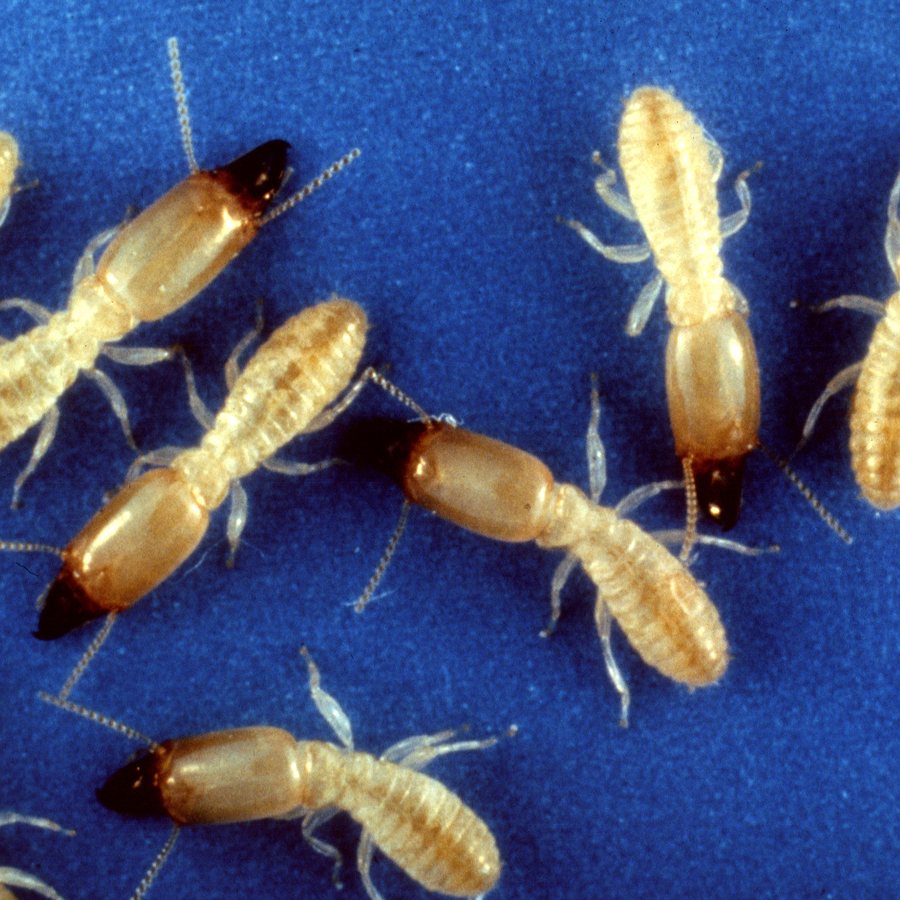
Termite control in Lancaster, TX starts with the ground your house is sitting on. Southern Dallas County sits on blackland prairie clay, soil that swells when it rains and shrinks hard in a Texas summer. That movement is what cracks slab-on-grade foundations, opens expansion joints, and pulls plumbing penetrations loose. Eastern subterranean termites live in that same soil and need contact with it, so every one of those cracks is a doorway to the sill plate and framing above. North Texas sits in a heavy termite pressure zone, and most homeowners never see the problem until they find mud tubes, a spring swarm, or wood that gives way. Call and a local pro can inspect and treat the colony.
Why Lancaster slabs are the weak point
Subterranean termites nest in soil and forage upward. On a slab-on-grade home they don't need a basement or a crawl space, they only need a crack. Expansive clay gives them plenty: shrinkage cracks through the slab, separated expansion joints, gaps where plumbing and conduit pass through, and the seam where a patio or driveway meets the house.
Add irrigation running against the foundation, mulch piled up over the slab edge, and the wood-to-soil contact of a fence post or deck ledger, and the colony has both moisture and a route. In a spring swarm you may see dark winged termites near a window; that's a colony already established, not one arriving.
What treatment looks like
A local exterminator inspects first, checking the slab perimeter, expansion joints, plumbing penetrations, the garage, and any wood near soil for mud tubes, damaged wood, discarded wings, or a swarm. Once subterranean termites are confirmed, the standard fix is a liquid termiticide soil barrier: trenching and treating the soil around the foundation, and drilling and treating through the slab where patios, porches, and driveways abut the house, so termites hit a continuous treated zone. In-ground bait stations are used where trenching is impractical.
The pro also flags the conditions feeding it, irrigation against the slab, mulch over the slab edge, wood-to-soil contact, and poor drainage, because the treated barrier lasts longer when the soil beside it isn't constantly saturated.
Call and connect with an experienced local exterminator.