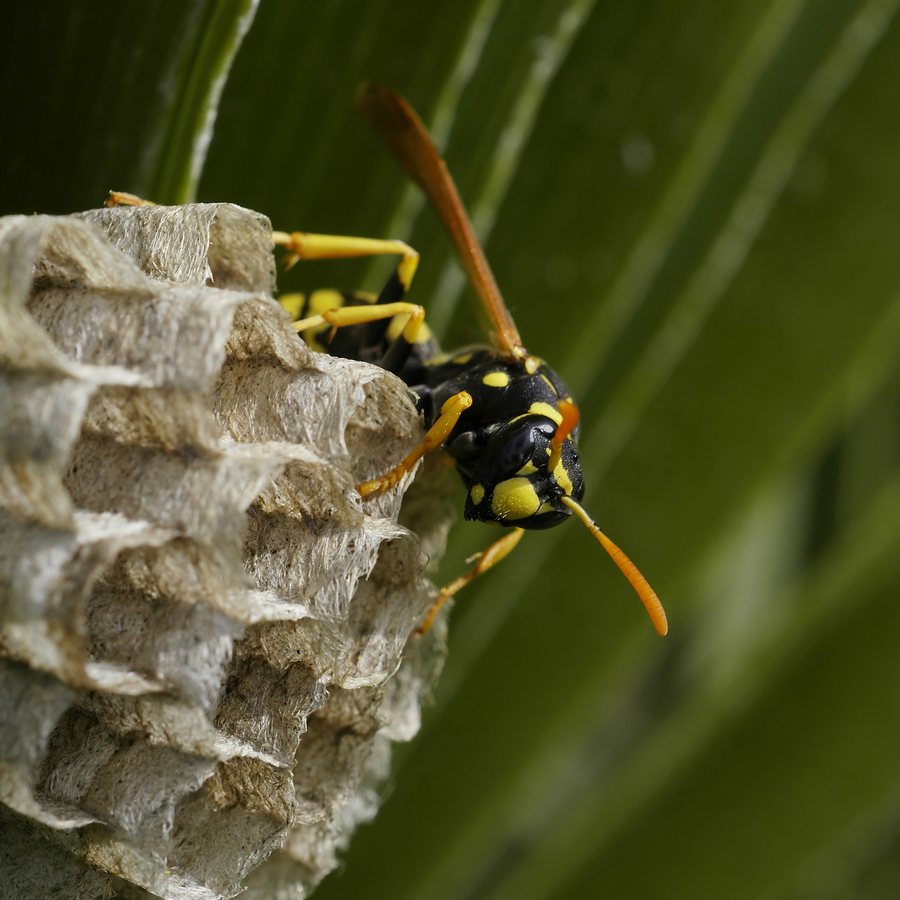
Wasp and hornet removal in Lancaster, TX runs from early spring deep into fall, because the Texas season is long. Paper wasps hang their open, umbrella-shaped combs under eaves, porch ceilings, patio covers, and inside grills and mailboxes. Yellowjackets, the aggressive ground and cavity nesters, colonize wall voids, weep holes, attic gaps, and old rodent burrows, and by late summer a colony numbers in the thousands. Mud daubers plaster their tubes on brick and soffits, and cicada killers dig into bare, sunny patches of yard. All of them defend a nest, and yellowjackets sting repeatedly. An experienced local exterminator removes the nest safely and treats so new queens don't recolonize the same spot.
Knowing what you're dealing with
Paper wasps hang a small, open comb you can see under an eave or porch ceiling; they're the least aggressive but will defend it. Yellowjackets nest out of sight, in wall voids, weep holes, attic gaps, and ground burrows, forage at trash and food, and get most dangerous at the late-summer peak. A steady stream of wasps into one spot in a wall or the ground means a hidden colony. Mud daubers are solitary and mostly harmless. Cicada killers look alarming but rarely sting.
A hidden yellowjacket nest inside a wall isn't a DIY job. Disturbing one without the right approach and protective gear provokes the whole colony.
How removal works
The exterminator identifies the nest and species, then treats and removes it with the proper products and protective gear, knocking down accessible paper wasp combs and treating hidden or ground-nesting yellowjacket colonies at the entrance so foragers carry it in. Void treatment handles nests inside walls, weep holes, and soffits.
Knocking down old nests and sealing gaps at eaves, weep holes, vents, and wall penetrations keeps new queens from re-colonizing the same spot next spring, which matters on a house that's hosted a nest year after year.
Call and connect with an experienced local exterminator.