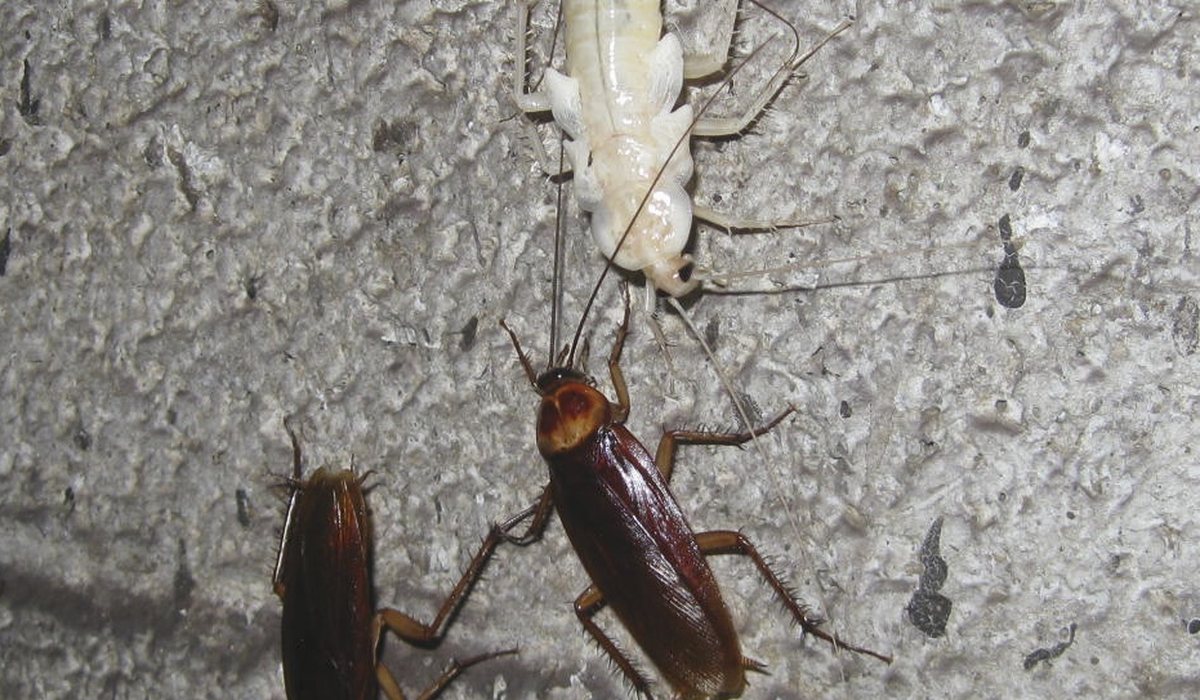
The huge reddish-brown roach in the bathroom at midnight is an American cockroach. It breeds outside, and it wants water.
Two roaches, two problems
If it's small, tan, fast, and in the kitchen, it's a German cockroach, an indoor breeder that lives in the warm crack behind your fridge and multiplies quickly. If it's big, reddish-brown, and showing up at night near a drain, garage, or the slab edge, it's an American cockroach, what Texans call a waterbug or palmetto bug.
They need different plans, so identifying which you have matters more than the product you buy.
Where the big ones live
American cockroaches breed outdoors, in sewers and storm drains, mulch beds, leaf litter, water meter boxes, and the damp voids under decks and slabs. They are not living in your house in numbers; they're visiting.
Two things drive the visits. The first is heat: when a North Texas summer bakes the ground dry, they come inside for water, up through floor drains and plumbing, and through the cracks a shifting clay slab has opened. The second is rain: a heavy downpour floods the storm system and pushes them out and up.
Why indoor spray misses
Spraying the bathroom where you saw it kills that one roach. The source is outside: the mulch bed against the foundation, the meter box, the drain line, the leaf litter in the gutter. Until that harborage is treated and the entry route is closed, the visits continue.
Meanwhile, gel bait designed for German roaches indoors isn't what an American roach is coming inside for. It wants water.
What actually reduces them
Treat the exterior harborage: drains, meter and irrigation boxes, mulch and leaf litter, the slab edge, and under decks. Seal the routes: door sweeps, weep holes, utility penetrations, and slab cracks. Keep sink and floor drains from staying dry, since a dry P-trap is an open pipe. Pull mulch back off the foundation, fix leaks, clear the gutters.
Those same slab cracks and weep holes are the ones termites, scorpions, and crickets are using, which is one reason a general perimeter plan tends to pay off in Lancaster.
For German roaches
Bait-led treatment placed exactly where they harbor, an insect growth regulator to stop breeding, and sealing gaps around plumbing and cabinets. Repellent sprays scatter them into wall voids and make the job longer. If you're seeing German roaches in daylight, the population is already large and worth a call.
Call and connect with an experienced local exterminator.