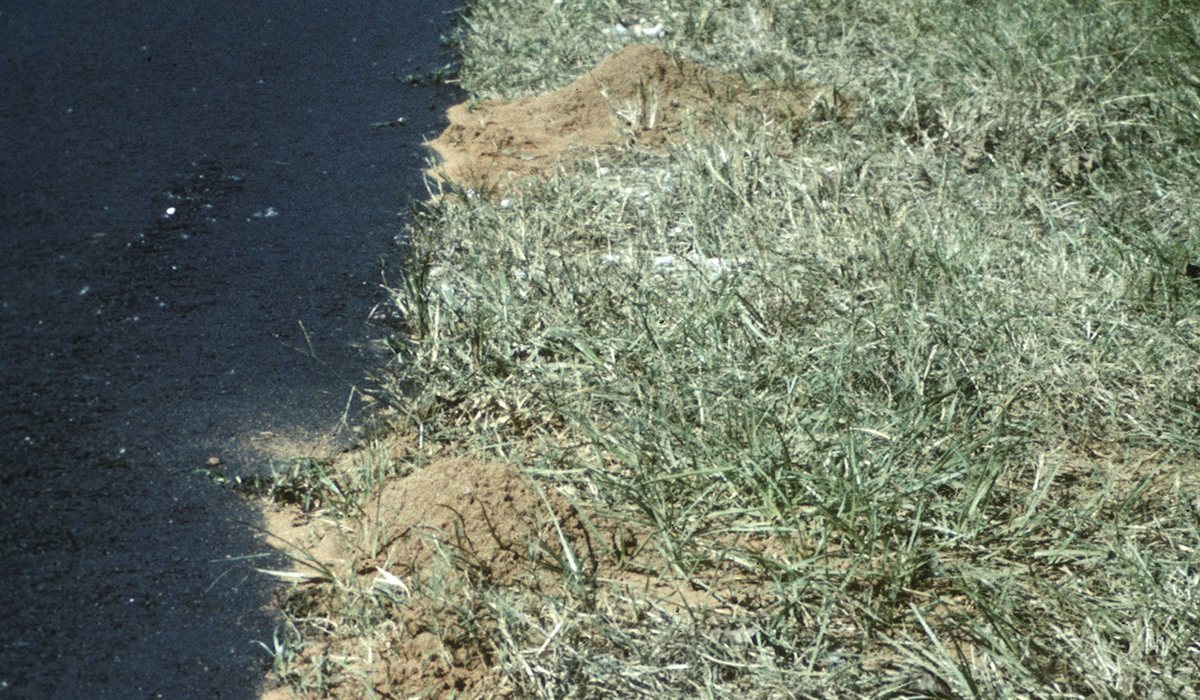
The mounds appear overnight because the colony is pushing soil out of flooded galleries. Here is what actually reduces them.
Overnight mounds are not new colonies
After a North Texas rain a Lancaster lawn can go from clean to a dozen mounds by morning. Those colonies were already there. Rain floods the underground galleries, and the workers excavate and push wet soil to the surface, building the loose dome you see. Rain also softens clay that was too hard to move.
So the mound count spikes without the colony count changing much. Which is exactly why kicking the mound over accomplishes nothing.
Why single-mound treatments backfire
Drench one mound and you may kill many workers, but if the queen survives or the colony has multiple queens, which red imported fire ants often do, the survivors relocate. Worse, disturbance can cause a colony to bud, splitting into several new mounds nearby. People treat one mound and end up with four.
Gasoline, bleach, boiling water, and club soda all show up in local advice. They damage the lawn, contaminate the soil, and don't reliably reach the queens.
What actually works
The reliable approach is a two-step. First, a yard-wide broadcast of slow-acting bait, applied when ants are actively foraging. Foragers pick it up, carry it down, and share it with the brood and the queens. Slow-acting is the point: fast-acting bait kills the forager before she gets home.
Second, direct treatment of mounds that remain after the bait has had time to move through. Doing it in that order treats the colonies you can see and the ones you can't.
Timing in North Texas
Ants forage when the soil surface is between roughly 70 and 90 degrees, which in Lancaster means early morning or evening through most of the warm season. Broadcasting bait onto ground that's too hot, or right before rain washes it away, wastes it.
The season is long here. Spring and fall are the strongest bait windows, and mounds surge after every rain in between.
Living with a Texas yard
Fire ants sting in numbers and defend the mound aggressively, so kids, pets, and anyone working in the yard have a real reason to want them gone. A yard adjacent to open ground, pasture, a creek corridor, or a new subdivision will get reinvaded, which is why fire ant work usually runs on a schedule rather than once.
An experienced local exterminator times the bait, treats the remaining mounds, and comes back before the population rebuilds.
Call and connect with an experienced local exterminator.