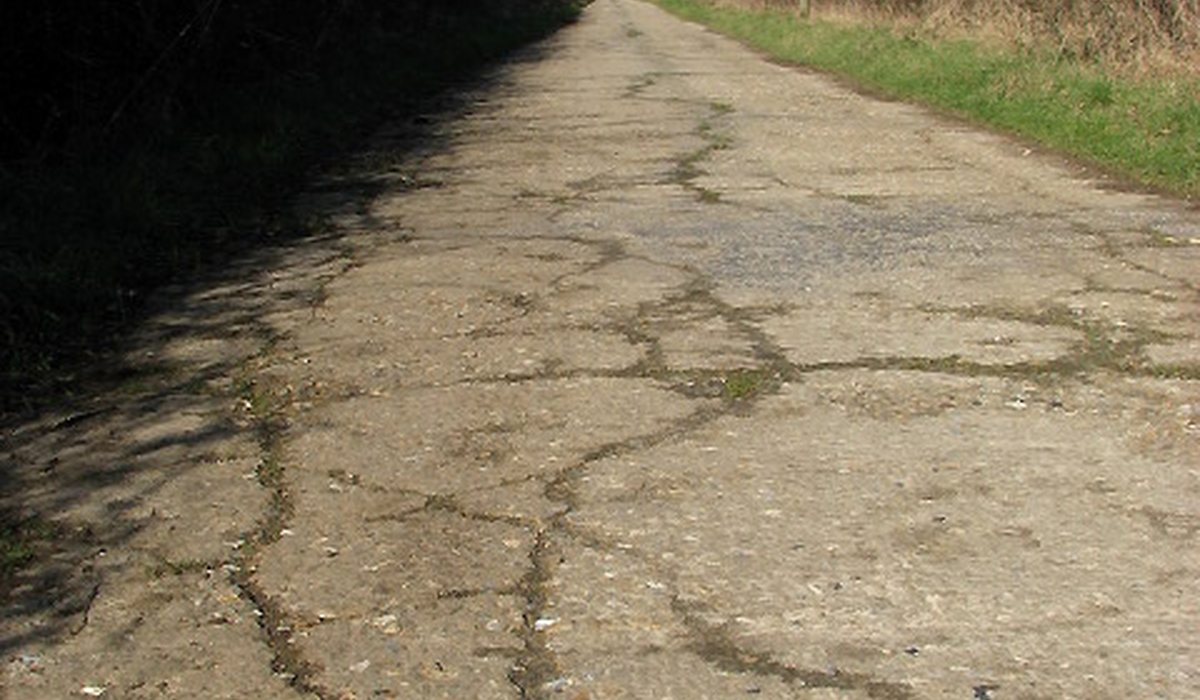
Blackland clay swells and shrinks, cracking slabs open. Subterranean termites live in that soil and only need a gap.
The ground moves
Lancaster sits on blackland prairie clay, a soil with a lot of swelling clay minerals in it. Soak it and it expands. Bake it through a Texas August and it shrinks and cracks. A slab-on-grade foundation sitting on that soil rides the movement, and over years it shows: shrinkage cracks through the slab, expansion joints that pull apart, plumbing and conduit penetrations that no longer seal, and the seam where a patio or driveway meets the house opening up.
None of that is unusual in southern Dallas County. It's the default.
Why termites care
Eastern subterranean termites nest in soil and have to stay in contact with it, or with a moisture source, to survive. They forage upward looking for wood. On a slab home there's no crawl space and no basement, so people assume the slab is a barrier. It isn't. Every crack, joint, and penetration is a route from soil to sill plate.
Termites will also build mud tubes up the exposed face of a foundation when they can't find a crack. Those pencil-width tubes on the slab, foundation wall, or garage are the single most common sign homeowners actually notice, and they mean an active colony.
What makes it worse
Irrigation heads spraying against the foundation keep the soil beside the slab permanently damp, which is exactly the condition termites want. Mulch piled over the slab edge does the same and hides the tubes. Wood-to-soil contact, a fence post against the house, a deck ledger, stacked firewood, hands them a bridge that skips the concrete entirely.
Poor drainage that lets water sit against the house makes all of it more attractive and shortens the life of any soil treatment already in place.
Signs worth a call
Mud tubes on the slab, foundation, or garage wall. A spring swarm of dark winged termites, usually on a warm day after rain. Discarded wings on windowsills or in spiderwebs. Wood trim, baseboards, or door frames that sound hollow, blister, or give way under a screwdriver. Sagging or buckling floors in an older home.
Any one of those means you're seeing a colony that's already established. Termites work quietly for years before anything shows.
What treatment involves
A local exterminator inspects the slab perimeter, expansion joints, plumbing penetrations, garage, and any wood near soil. If subterranean termites are confirmed, the standard fix is a liquid termiticide soil barrier: trench and treat the soil around the foundation, and drill and treat through concrete where patios, porches, and driveways abut the house, so the treated zone is continuous. In-ground bait stations go where trenching isn't practical.
Then the conditions get corrected, irrigation moved off the foundation, mulch pulled back, wood-to-soil contact removed, drainage improved. A treated barrier in dry, well-drained soil lasts a lot longer than one sitting in a puddle.
Call and connect with an experienced local exterminator.