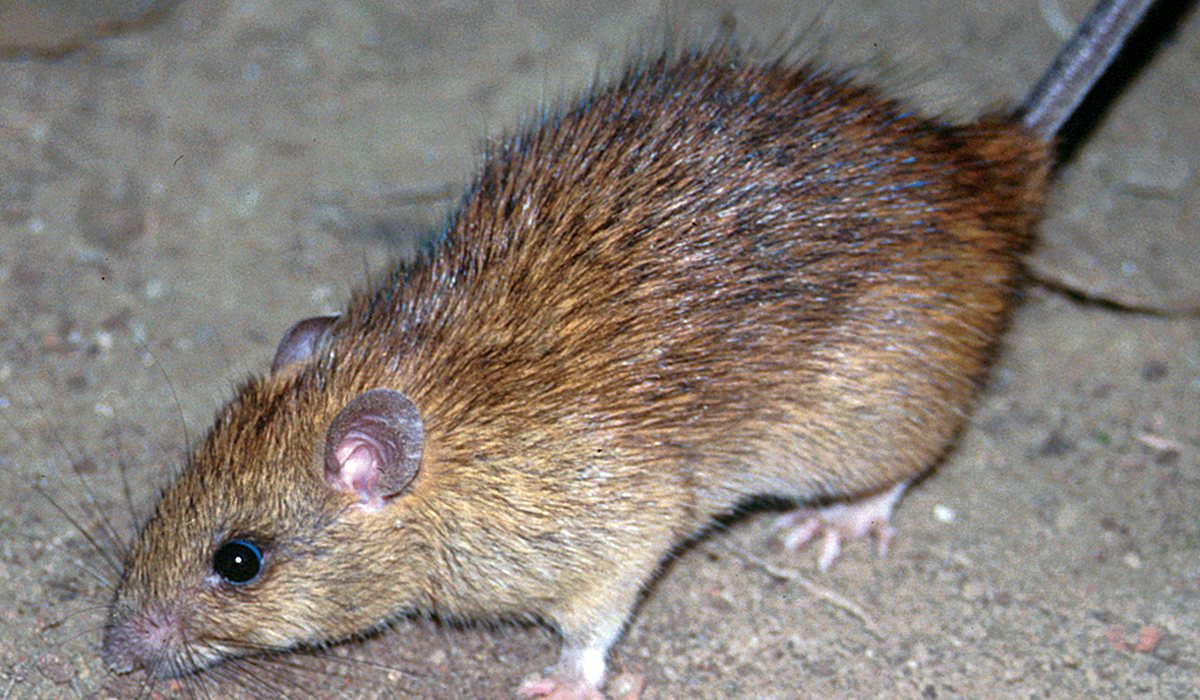
They climb. Limbs, fences, and cables lead to a vent gap or a cracked stack boot, and then to your insulation and wiring.
The rat you have is probably a climber
People picture rats in a sewer. The roof rat, the species most Lancaster homeowners meet, lives above ground. It's lean, long-tailed, and an excellent climber, and it moves along fence tops, tree limbs, and utility lines out of the creek corridors and the mature tree lines of the older neighborhoods.
Its destination is your roof. Norway rats do work the ground, especially around the I-35E and I-45 warehouse corridor's loading docks and dumpster pads, but the attic problem is usually roof rats.
Where they get in
A rat can pass through a gap about the size of a quarter. Common Lancaster entry points: unscreened gable and soffit vents, the corner where two roof planes meet, a lifted shingle edge, and above all a plumbing stack boot whose rubber collar has cracked in the Texas sun. Down low, the garage door corners, weep holes, and gaps around utility penetrations let mice in.
Once in the attic they nest in insulation, gnaw wiring, which is a fire risk, and drop into wall voids. Scratching or scurrying overhead at night, droppings in the attic or garage, gnaw marks on stored boxes, and a musky smell are the usual first signs.
Why bait alone disappoints
Scattered bait can leave a rat dead inside a wall or under insulation, and the odor lasts for weeks. It also does nothing about the next rat that follows the same route in, and rats travel between properties along the tree lines. A house can keep getting hit indefinitely while the openings stay open.
Trapping plus exclusion
The reliable approach is trapping on the runways rats actually use, followed by exclusion: every entry point sealed with rodent-proof materials. That means the roofline, gable and soffit vents, the stack boots, the garage door corners, plumbing and conduit penetrations, weep holes, and the slab edge.
Then the attractants go. Trim limbs back so nothing overhangs the roof. Pick up fallen fruit and pet food. Secure the trash. Fix standing water and leaks. A sealed house with nothing to eat isn't worth the climb.
Confirming it's over
Activity should stop, not slow. A local exterminator returns to check traps and monitors, confirms no fresh droppings or gnawing, and verifies the seals held. Skipping that follow-up is how a rodent job quietly turns into a recurring one.
Call and connect with an experienced local exterminator.